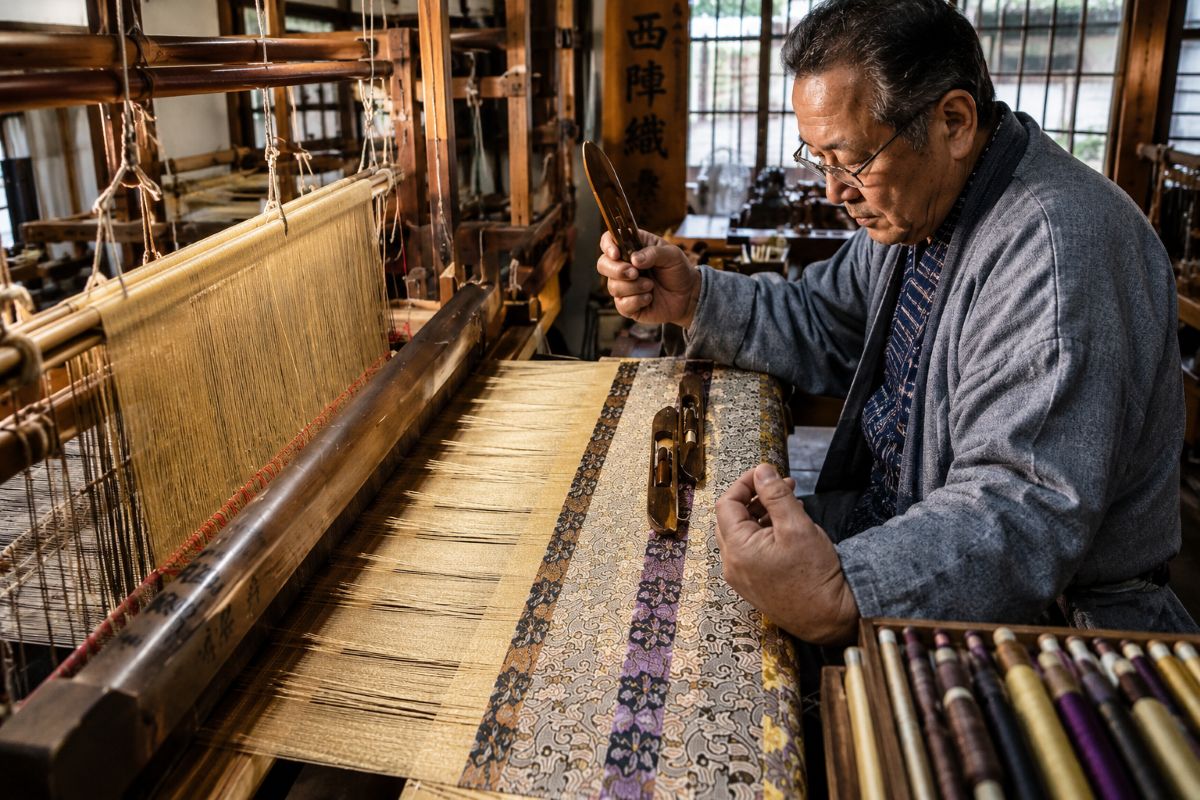
Traditional silk towns preserve Japan’s rich textile heritage and continue to showcase centuries of craftsmanship. Visitors come to explore historic streets, watch skilled artisans at work, and discover how silk has shaped local culture for generations.
Silk weaving has flourished in Japan for hundreds of years, producing elegant fabrics for kimono, obi, and other traditional garments. Many workshops still use techniques passed down through families, blending traditional skills with modern designs.
Two of Japan’s best-known silk towns are Nishijin in Kyoto, home to Nishijin-ori, a weaving tradition with more than 550 years of history that uses more than 20 traditional weaving techniques to create some of Japan’s finest silk textiles, and Kiryu in Gunma Prefecture, where silk weaving dates back over 1,300 years. Visitors can explore museums, weaving studios, and historic streets while learning how these traditions continue to support local artisans today.
For many Japanese people, visiting a traditional silk town is more than sightseeing. It is an opportunity to appreciate living craftsmanship, support local artisans, and experience one of Japan’s most enduring cultural traditions.


コメント