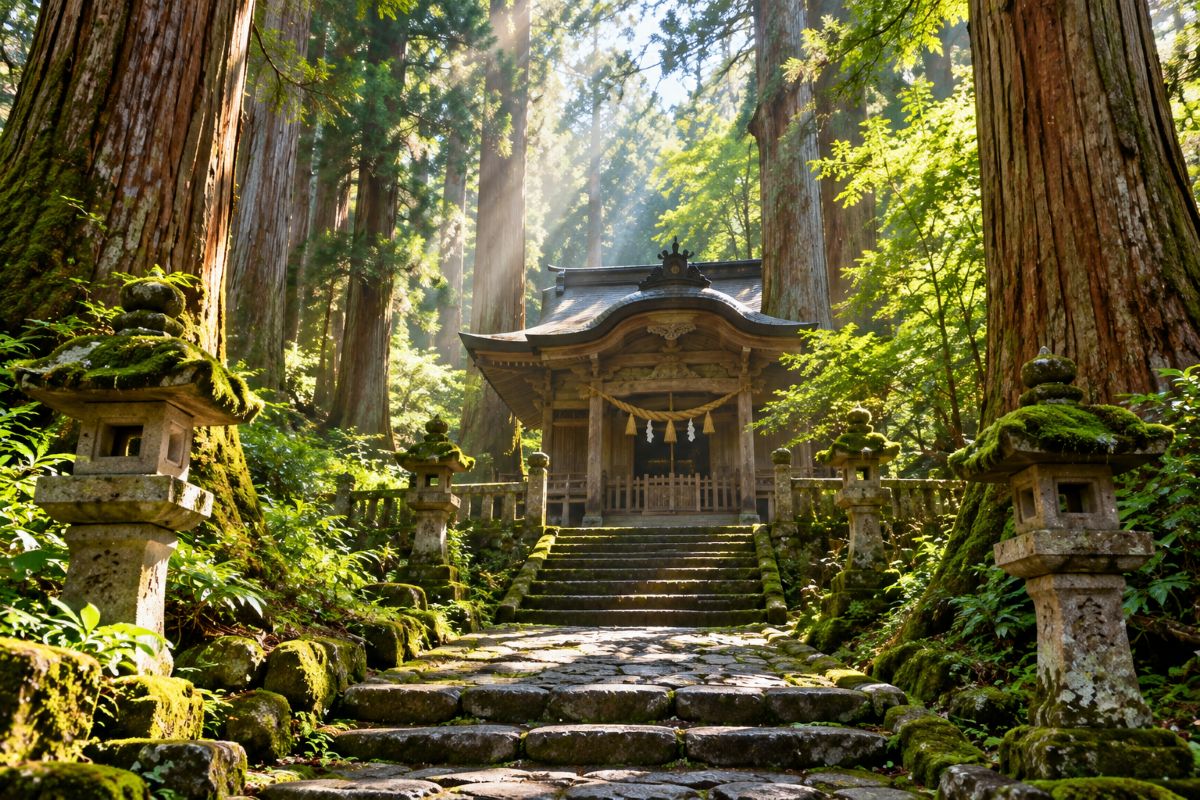
Beyond Japan’s famous city shrines, sacred places can be found deep in forests, mountains, and quiet villages. Their natural surroundings invite visitors to slow down and appreciate local traditions.
In Shinto, Japan’s indigenous religious tradition, kami are associated with mountains, trees, waterfalls, rocks, and other aspects of nature. Shrines often reflect this connection.
One remarkable example is Togakushi Shrine in Nagano Prefecture. A two-kilometer path leads to its inner shrine, Okusha, passing through an avenue of cedar trees approximately 400 years old. The walk takes around 40 minutes each way.
Another sacred destination is Amanoyasukawara in Miyazaki Prefecture, a large riverside cave about 10 minutes on foot from Amanoiwato Shrine’s western sanctuary. According to Japanese mythology, countless gods gathered here to discuss how to bring the sun goddess Amaterasu out of hiding. Visitors can see numerous small stone piles left by worshippers.
Although both places attract many visitors, their forest and cave settings offer a different experience from urban shrines.
For many Japanese people, visiting such places is an opportunity for prayer, reflection, and a deeper appreciation of nature.

コメント