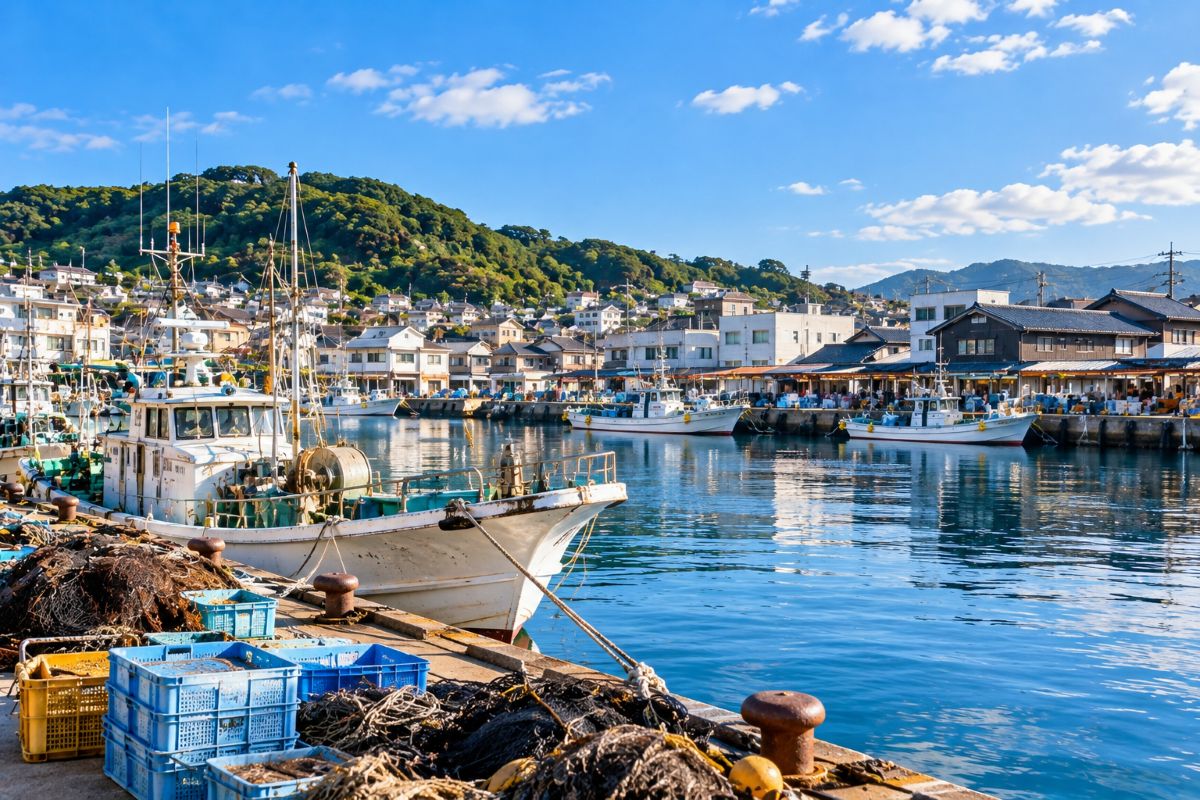
Surrounded by the sea, Japan has many harbor towns where fishing traditions and everyday life are closely connected. Fishing boats, seafood markets, and waterfront streets give these communities their distinctive character.
One example is Misaki Port in Kanagawa Prefecture, on the Miura Peninsula. Since the early 20th century, it has developed into an important base for deep-sea tuna fishing. Much of the tuna landed here comes from distant oceans. Visitors can enjoy local seafood restaurants, especially maguro-don, rice topped with slices of tuna.
Another destination is Hakodate in Hokkaido, which opened to international trade in 1859. Its famous morning market began in 1945, when farmers started selling vegetables near the railway station. Today, approximately 250 shops offer seafood, fresh produce, and local specialties, including squid and seafood rice bowls.
These towns also reveal the hard work behind Japan’s seafood culture, from long fishing voyages to the daily activities of markets and local businesses.
For many Japanese people, visiting harbor towns offers a chance to enjoy regional food, admire coastal scenery, and appreciate communities shaped by the sea.


コメント