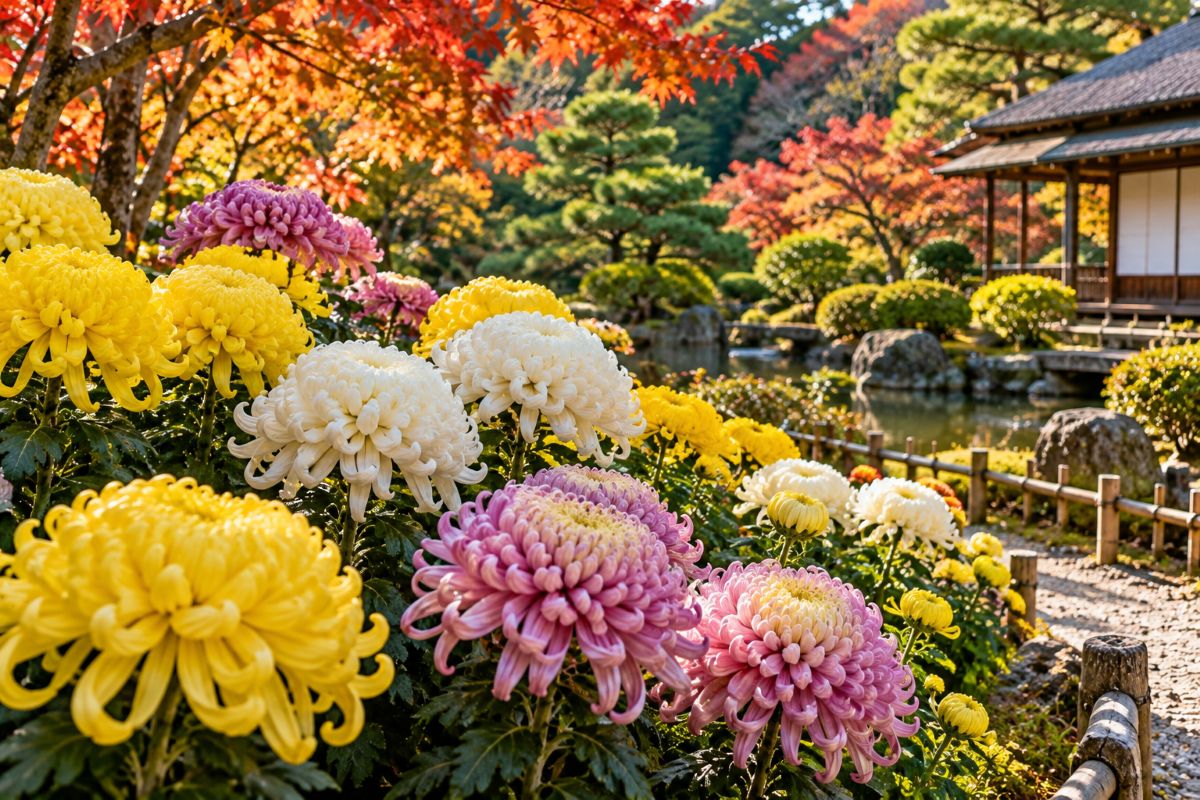
In Japan, chrysanthemums, known as kiku, are cherished autumn flowers. Their elegant petals and remarkable variety of shapes and colors have inspired gardeners and artists for centuries.
Introduced from China, chrysanthemums became popular among Japanese aristocrats during the Heian period (794–1185). They came to symbolize longevity and refinement. The sixteen-petaled chrysanthemum is also closely associated with Japan’s imperial family.
The traditional Chōyō no Sekku, or Chrysanthemum Festival, falls on September 9 and originated as a celebration on the ninth day of the ninth lunar month. People once drank chrysanthemum-infused sake and wished for long life and good health.
Autumn brings chrysanthemum exhibitions across Japan, featuring carefully cultivated blooms, cascading arrangements, and elaborate floral displays.
A famous example is the Nihonmatsu Chrysanthemum Doll Festival in Fukushima Prefecture. First held in its present form in 1955, the festival features kiku ningyō, figures decorated with living chrysanthemums. The displays often depict historical scenes and characters.
For many Japanese people, chrysanthemums represent more than seasonal beauty. They reflect generations of horticultural skill, cultural traditions, and an appreciation for autumn’s changing colors.


コメント