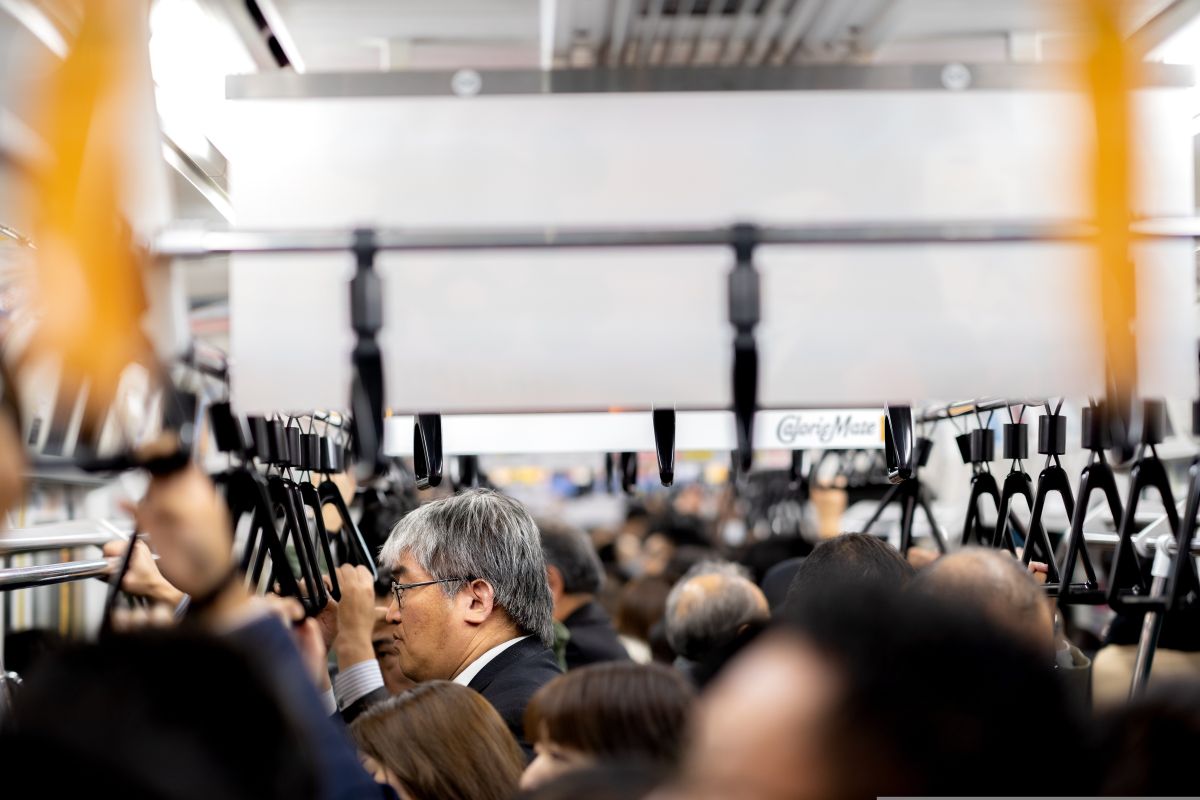
Many visitors to Japan notice that people rarely eat on local trains.
Even during long commutes, passengers usually avoid snacks, sandwiches, or other meals.
At first, this may seem surprising.
After all, eating on public transportation is common in many countries.
So why is it different in Japan?
One reason is consideration for others.
Commuter trains are often crowded, especially in large cities like Tokyo and Osaka.
People stand close together, and strong food smells can easily affect nearby passengers.
Because of this, many people feel that eating should be avoided in shared spaces where others cannot easily move away.
Another reason is the purpose of the train.
Local trains are mainly used for daily transportation.
Most passengers are focused on getting to work, school, or home.
As a result, eating is generally seen as unnecessary during the journey.
Interestingly, this rule is not absolute.
On long-distance trains such as the Shinkansen, eating is completely normal.
Many travelers even look forward to enjoying an ekiben—a special boxed meal sold at train stations.
The difference reflects the type of journey.
Commuter trains are designed for transportation, while long-distance trains are often part of the travel experience itself.
For many Japanese people, avoiding food on crowded trains is simply a small way of showing consideration for others.
It is another example of how public manners help shared spaces remain comfortable for everyone.


コメント