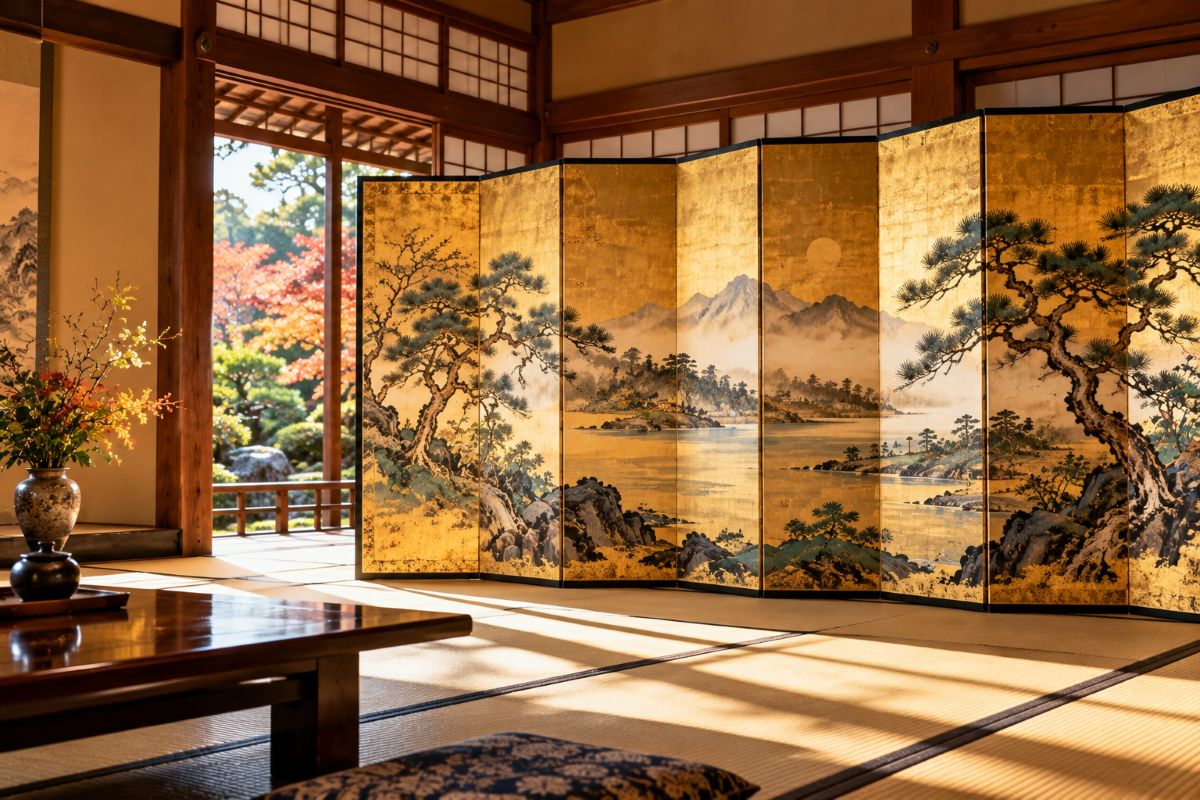
Japanese folding screens, known as byōbu, combine practical design with artistic beauty. Traditionally used to divide rooms, block drafts, and decorate interiors, they have enriched Japanese spaces for centuries.
Their hinged panels allow them to stand independently, change a room’s appearance, and fold away when not needed. Many feature landscapes, flowers, birds, or seasonal scenes. Some are decorated with gold leaf, creating a luminous background for painted figures.
A celebrated masterpiece is Wind God and Thunder God Screens (Fūjin Raijin-zu Byōbu) by Tawaraya Sōtatsu, dating from the 17th century. This pair of two-panel screens depicts powerful deities against a golden background. The original belongs to Kyoto’s Kenninji Temple.
Another National Treasure is Pine Trees (Shōrin-zu Byōbu) by Hasegawa Tōhaku, created in the 16th century. Its pair of six-panel screens uses black ink and open space to evoke a misty pine forest. The work belongs to the Tokyo National Museum.
Together, these masterpieces reveal contrasting artistic approaches: dramatic golden imagery and restrained ink painting.
For many Japanese people, byōbu represent a remarkable meeting of painting, craftsmanship, and thoughtful interior design.


コメント