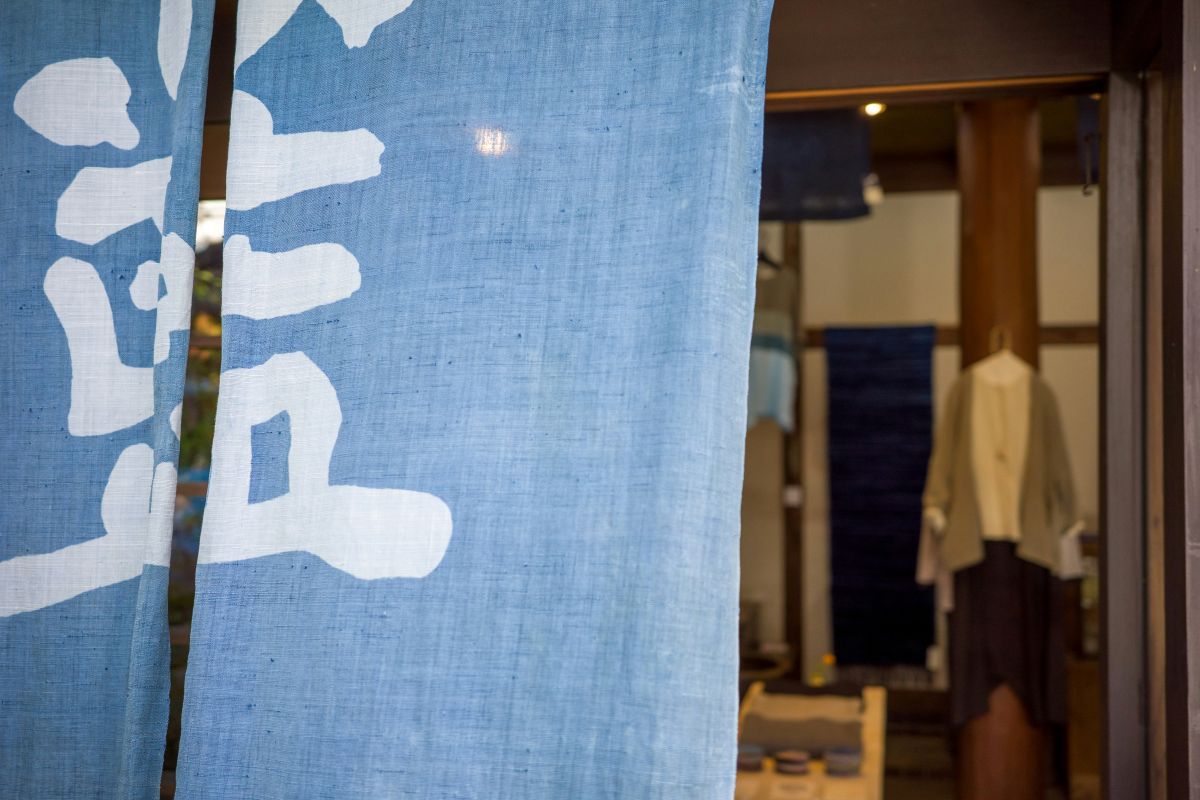
Traditional indigo villages preserve one of Japan’s oldest and most beautiful craft traditions. Visitors come to experience aizome (indigo dyeing), explore historic streets, and learn how natural indigo has been produced for centuries.
Natural indigo dye, made from fermented indigo leaves, creates deep blue colors that become richer with repeated dyeing. This sustainable craft has been passed down through generations and continues to inspire artisans today.
Two of Japan’s best-known indigo destinations are Wakimachi Udatsu Townscape in Tokushima Prefecture, where prosperous indigo merchants built elegant streets during the Edo period, and Tokushima City, home to workshops where visitors can experience traditional Awa Ai indigo dyeing. Awa Ai has been cultivated for more than 400 years and, during the Edo period, was shipped throughout Japan, becoming one of the country’s most important natural dyes.
For many Japanese people, visiting traditional indigo villages is more than sightseeing. It is an opportunity to appreciate living craftsmanship, discover Japan’s rich cultural heritage, and experience the timeless beauty of natural indigo.


コメント