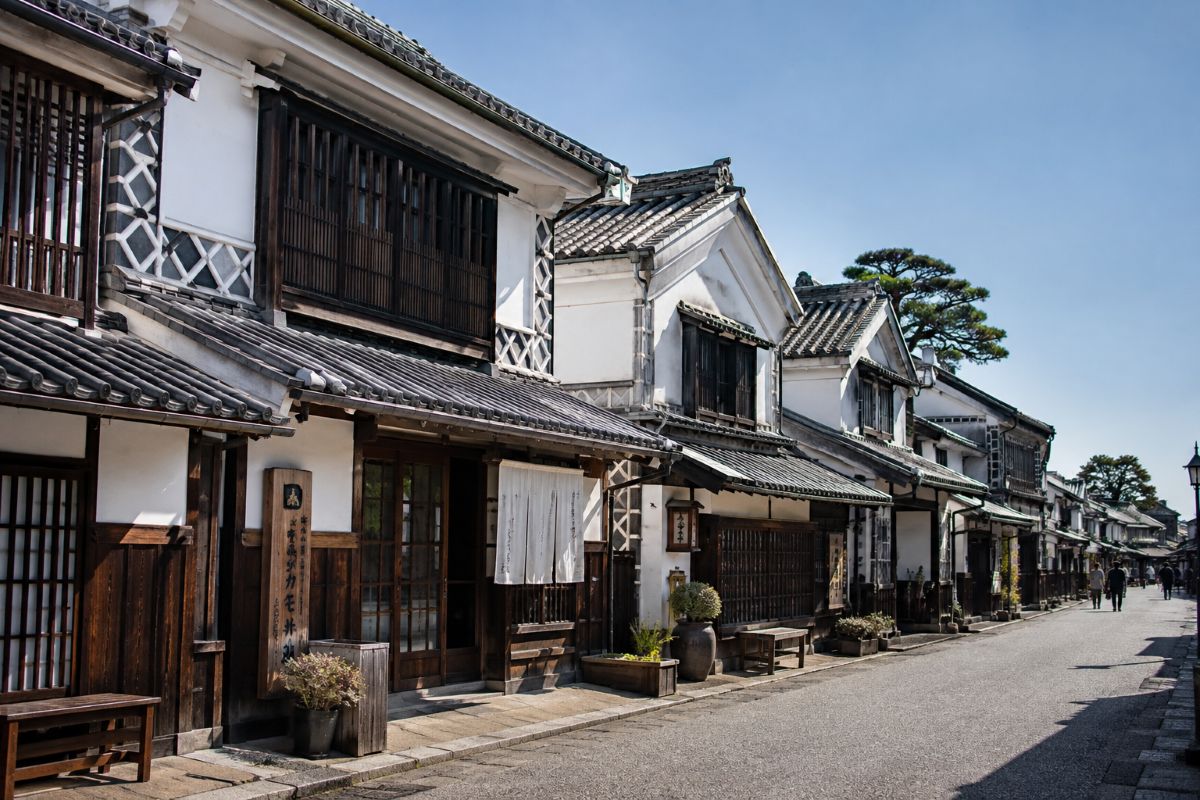
Traditional Japanese storehouses, known as kura, have protected valuable goods, documents, and family treasures for centuries. Built with thick earthen walls and sturdy wooden beams, they were designed to resist fire, humidity, and changing weather.
Many kura date back to the Edo period (1603–1868) and remain well preserved today. Their distinctive white plaster walls and black roof tiles have become iconic features of Japan’s historic townscapes.
Some of Japan’s best-known kura districts include Kurashiki Bikan Historical Quarter in Okayama Prefecture, where beautifully preserved white-walled storehouses line scenic canals, and Kawagoe in Saitama Prefecture, often called “Little Edo” for its historic streets lined with traditional kura buildings.
Today, many former storehouses have been transformed into cafés, museums, galleries, and local shops while preserving their original architecture. They offer visitors a chance to experience Japan’s history in a unique and welcoming setting.
For many Japanese people, traditional storehouses are more than historic buildings. They represent craftsmanship, resilience, and a lasting connection to Japan’s cultural heritage.


コメント