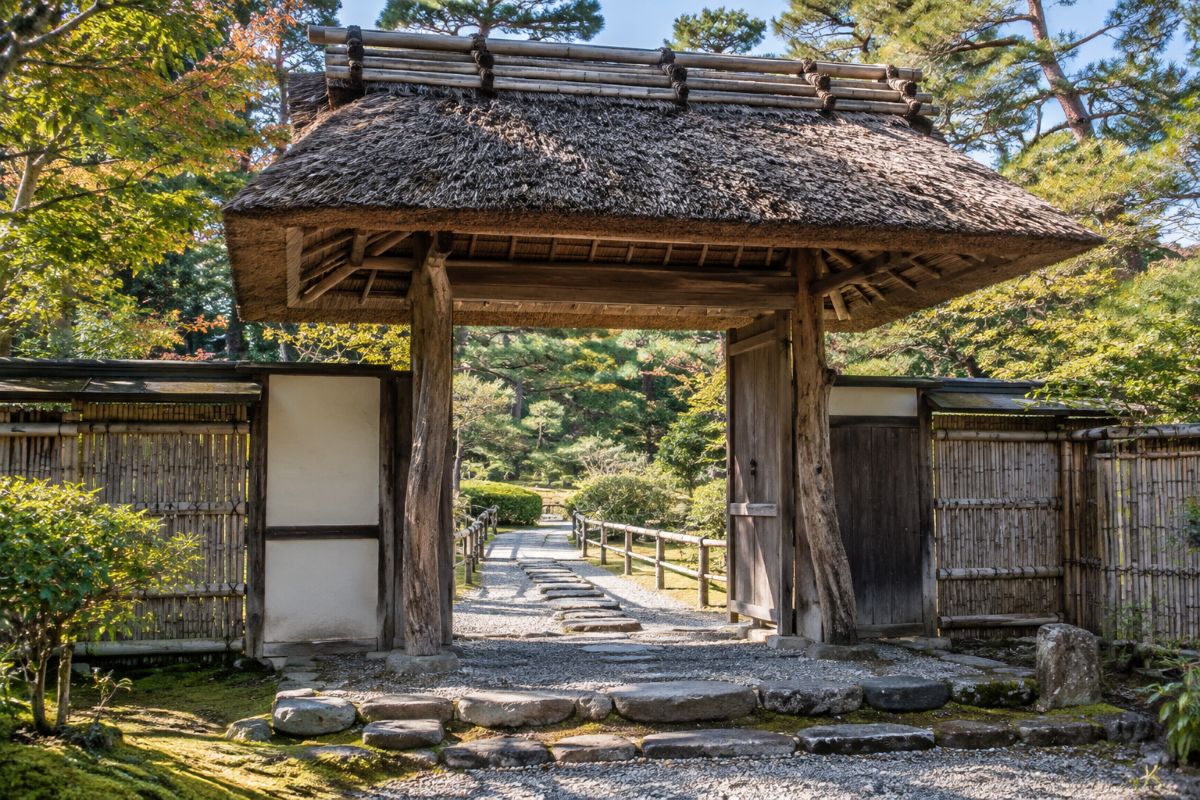
In traditional Japanese gardens, a gate is more than an entrance. It marks the transition from the busy outside world into a peaceful space, inviting visitors to slow down and appreciate nature.
Garden gates come in many styles, from simple wooden structures to elegant entrances with carefully crafted details. Natural materials such as wood, bamboo, and thatch help them blend into the surrounding landscape.
At Katsura Imperial Villa in Kyoto, the beautiful Miyukimon Gate was originally built in the 17th century and reconstructed in the 18th century. Its reed-thatched roof and natural wooden pillars reflect the understated elegance of traditional Japanese architecture.
Another example is Kenrokuen Garden in Kanazawa, whose history began in 1676. Visitors enter through traditional garden entrances before exploring winding paths, ponds, bridges, and carefully arranged trees.
These gates remind us that entering a garden can be an experience in itself. Their simple beauty reflects the craftsmanship and thoughtful design found throughout Japanese gardens.
For many Japanese people, traditional garden gates represent a gentle passage from everyday life into a quieter world of natural beauty.


コメント