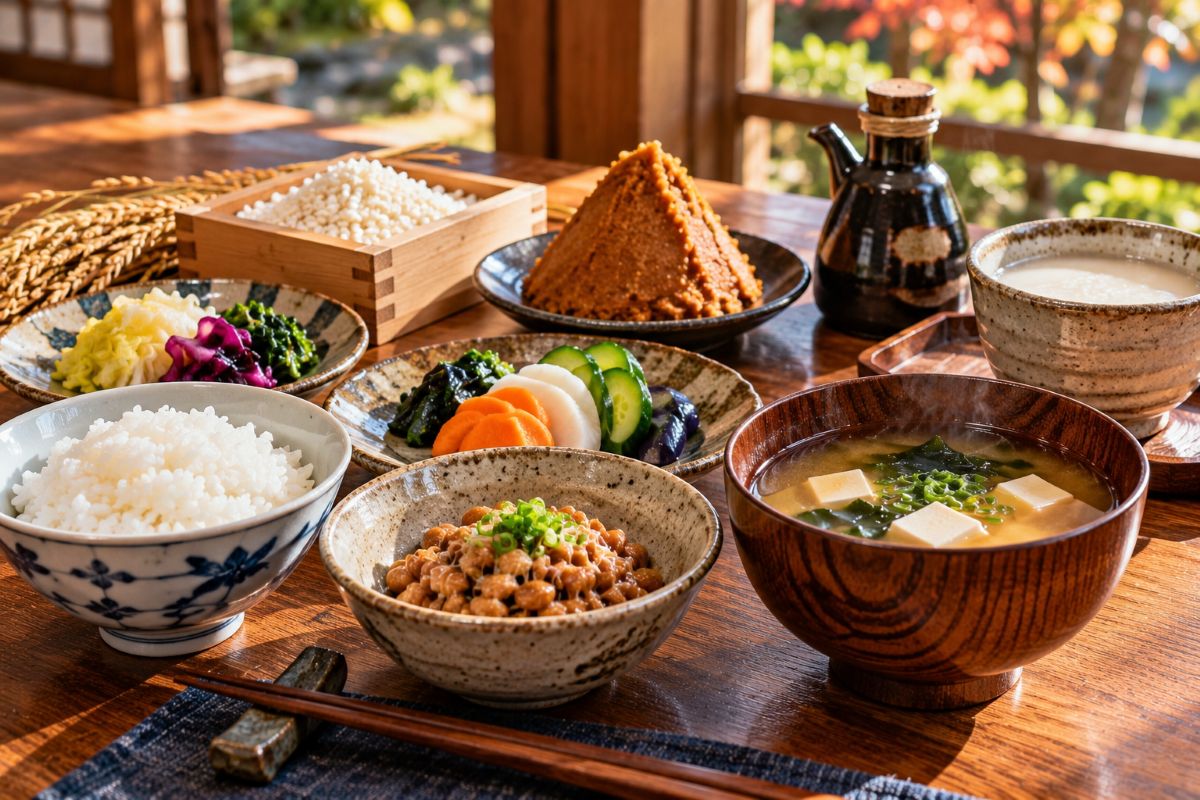
Fermented foods have shaped Japanese cuisine for centuries. From miso soup to traditional pickles, fermentation creates distinctive flavors and helps preserve certain ingredients.
Central to this tradition is kōji, made by cultivating molds such as Aspergillus oryzae on rice, barley, or soybeans. Kōji is essential to producing miso, soy sauce, and sake. It also helps make rice-based amazake, a naturally sweet drink.
Another familiar food is natto, soybeans fermented using Bacillus subtilis var. natto. Known for its sticky texture and distinctive aroma, it is often served over rice.
Japanese pickles, called tsukemono, offer another example. Nukazuke vegetables ferment in rice bran, while some vinegar-based pickles are preserved without fermentation.
Fermentation also develops umami, the savory taste important to Japanese cooking. Some fermented foods contain living microorganisms, but not all do, especially after heating. Their nutritional benefits vary, and salty products should be enjoyed in moderation.
For many Japanese people, fermented foods connect everyday meals with regional traditions and generations of culinary knowledge.

コメント