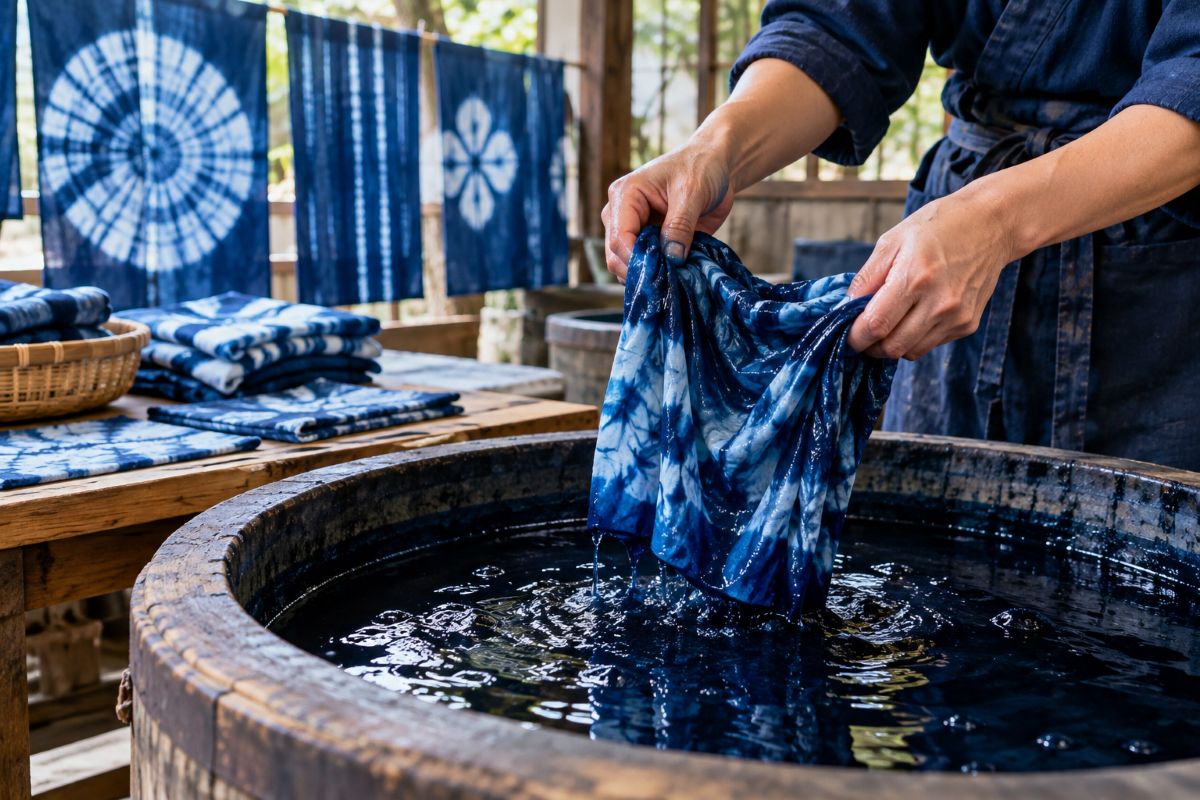
In Japan, traditional dye workshops offer a chance to experience centuries of craftsmanship through color, fabric, and creativity. Rather than simply admiring beautiful textiles, participants can discover how skilled artisans transform plain cloth into something special.
One popular experience is indigo dyeing in Tokushima Prefecture, famous for Awa Ai, its traditional indigo dye. Visitors can fold or tie fabric before dipping it into a dye bath, creating unique blue patterns. Tokushima was already known for indigo production during the Muromachi period.
Another example is Kyoto Yuzen dyeing, which developed during the late 17th century. This technique creates colorful designs, often inspired by flowers and nature. At workshops, participants may apply colors to prepared patterns on handkerchiefs or other fabric items.
These activities also introduce visitors to the patience and precision required in traditional crafts. Even a small piece of fabric can reveal the care involved in producing beautiful colors and patterns.
For many Japanese people, traditional dye workshops provide a meaningful way to connect with local history, appreciate handmade objects, and create lasting memories.


コメント