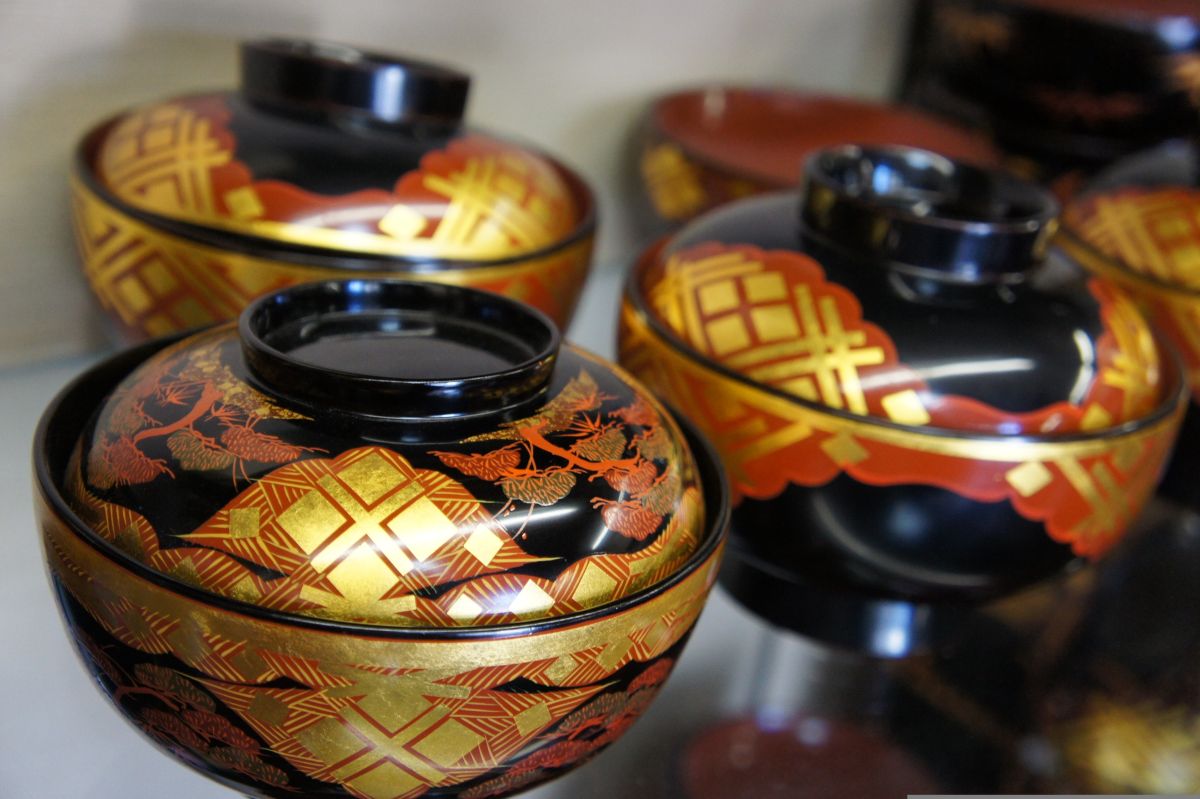
Japanese lacquerware, known as urushi, has been admired for more than 1,000 years. Crafted by applying multiple thin layers of natural lacquer, each piece combines exceptional durability with timeless beauty.
Creating lacquerware requires remarkable patience and skill. Artisans carefully polish and apply layer after layer of lacquer, sometimes decorating the surface with gold powder (maki-e) or delicate inlays. The result is tableware and decorative objects that can last for generations when properly cared for.
Two of Japan’s best-known lacquerware traditions are Wajima-nuri in Ishikawa Prefecture, where some pieces require more than 100 production steps to complete, and Aizu-nuri in Fukushima Prefecture, which has flourished for more than 400 years and is celebrated for its elegant everyday tableware.
For many Japanese people, lacquerware is more than beautiful craftsmanship. It represents patience, refinement, and the enduring value of handmade objects that become more beautiful with time.


コメント