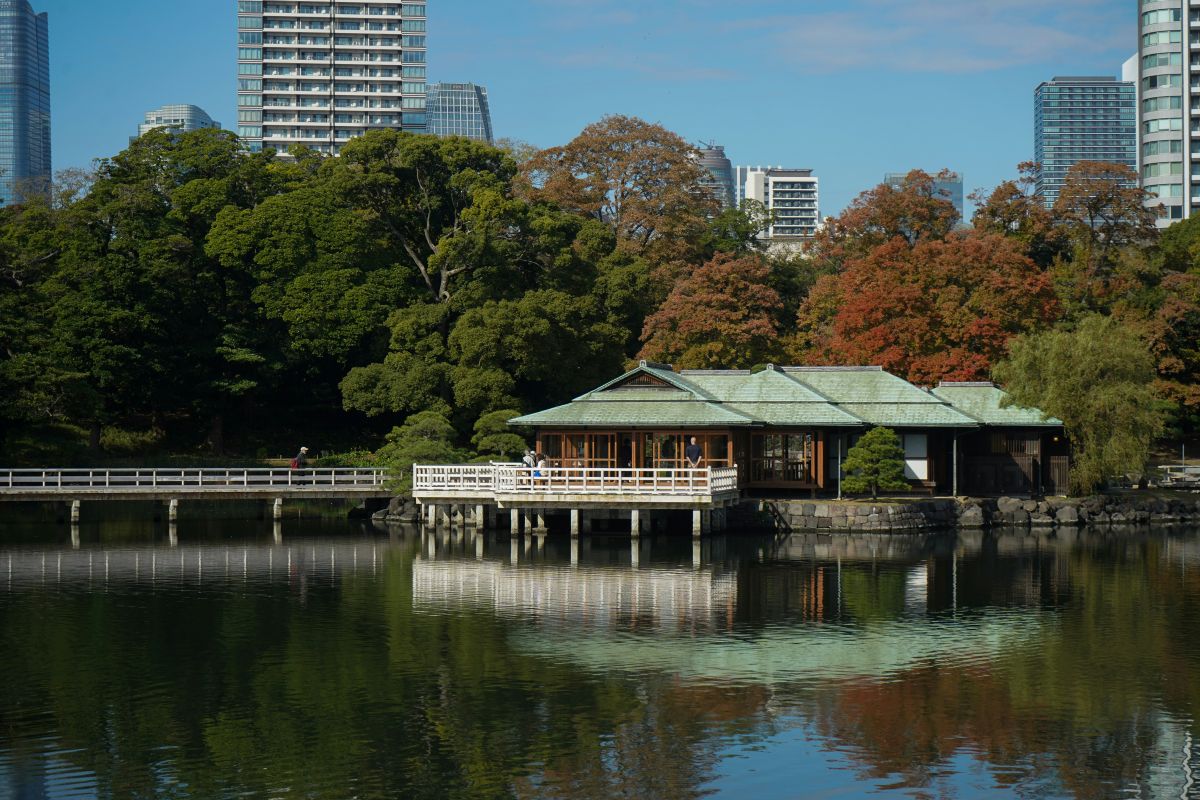
Traditional Japanese gardens are more than beautiful landscapes. They are designed to create harmony between nature and people, offering a peaceful place to slow down and reflect.
Unlike many Western gardens, Japanese gardens are carefully arranged to look natural. Every stone, tree, pond, and bridge has a purpose. Many gardens also change beautifully with the seasons, making each visit unique.
There are several styles of Japanese gardens, each offering a different experience.
- Pond Gardens (Strolling Gardens) are designed around a central pond and are meant to be enjoyed while walking along winding paths. Famous examples include Kenroku-en in Kanazawa, Koraku-en in Okayama, and Hamarikyu Gardens in Tokyo.
- Dry Rock Gardens (Karesansui) use carefully arranged rocks and raked gravel to represent mountains, rivers, and the natural world. The most famous example is Ryōan-ji Temple in Kyoto.
- Tea Gardens (Roji) are designed as the approach to a traditional tea house, creating a quiet transition from everyday life to the peaceful atmosphere of the tea ceremony. A well-known example is the tea garden at Kōdai-ji Temple in Kyoto.
Each style reflects different aspects of Japanese culture, philosophy, and aesthetics.
Today, people visit Japanese gardens not only to admire their beauty but also to relax, enjoy quiet moments, and reconnect with nature. Whether you visit Kyoto, Tokyo, Kanazawa, or Okayama, exploring a traditional Japanese garden is one of the best ways to experience the beauty of Japanese culture and the changing seasons.


コメント