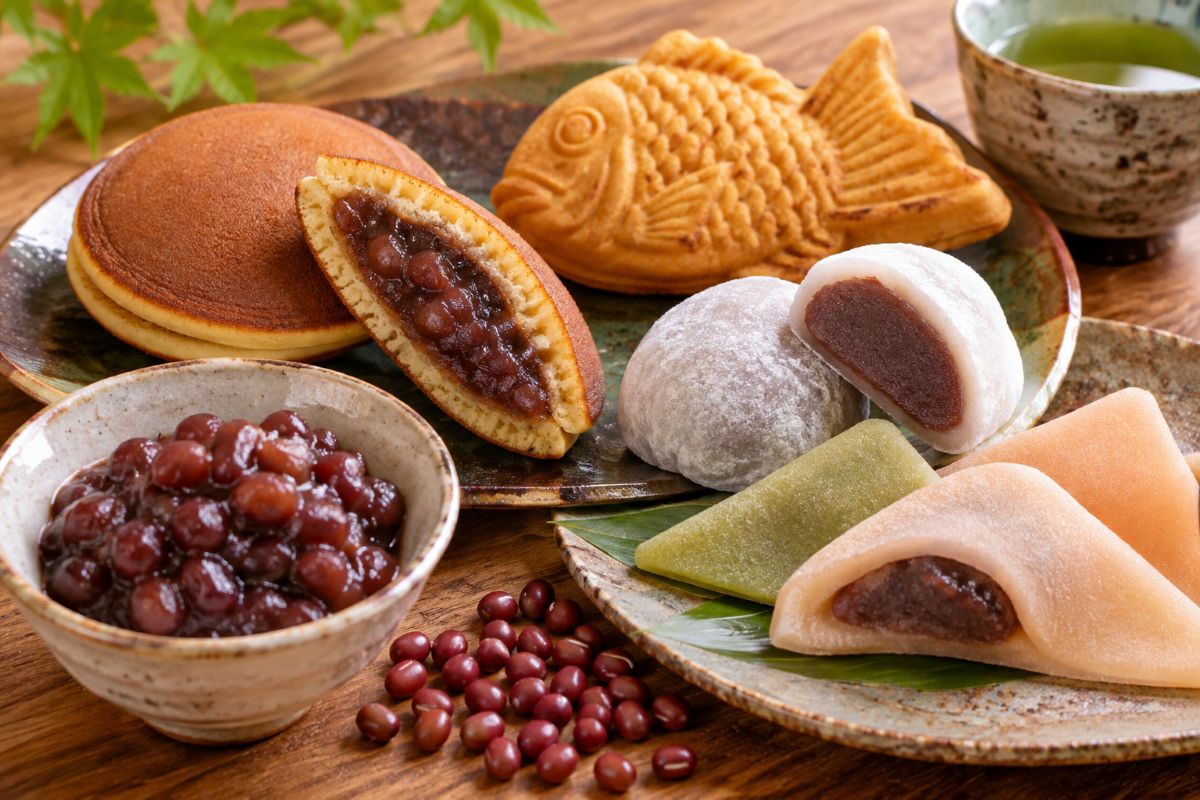
In Japan, sweet red bean paste, known as anko, is an essential part of traditional sweets called wagashi. Made from cooked azuki beans and sugar, it has a distinctive flavor and comforting sweetness.
Two popular varieties are tsubuan and koshian. Tsubuan retains whole or partly intact beans, giving it a chunky texture. Koshian is strained to remove the bean skins, creating a smooth paste.
Anko appears in many familiar treats. Dorayaki contains sweet bean paste between two soft pancakes, while taiyaki is a fish-shaped cake traditionally filled with anko.
In Asakusa, Tokyo, visitors can enjoy ningyō-yaki, small baked cakes available with sweet bean fillings. In Kyoto, anko-filled nama yatsuhashi is a popular souvenir made with soft, folded dough.
Azuki beans have been eaten in Japan since ancient times. However, sweetened anko became widely enjoyed during the Edo period (1603–1868) as sugar became more accessible.
Anko is also closely connected to seasonal celebrations and family traditions.
For many Japanese people, its appeal comes from familiar flavors, contrasting textures, and memories of traditional sweets shared across generations.


コメント