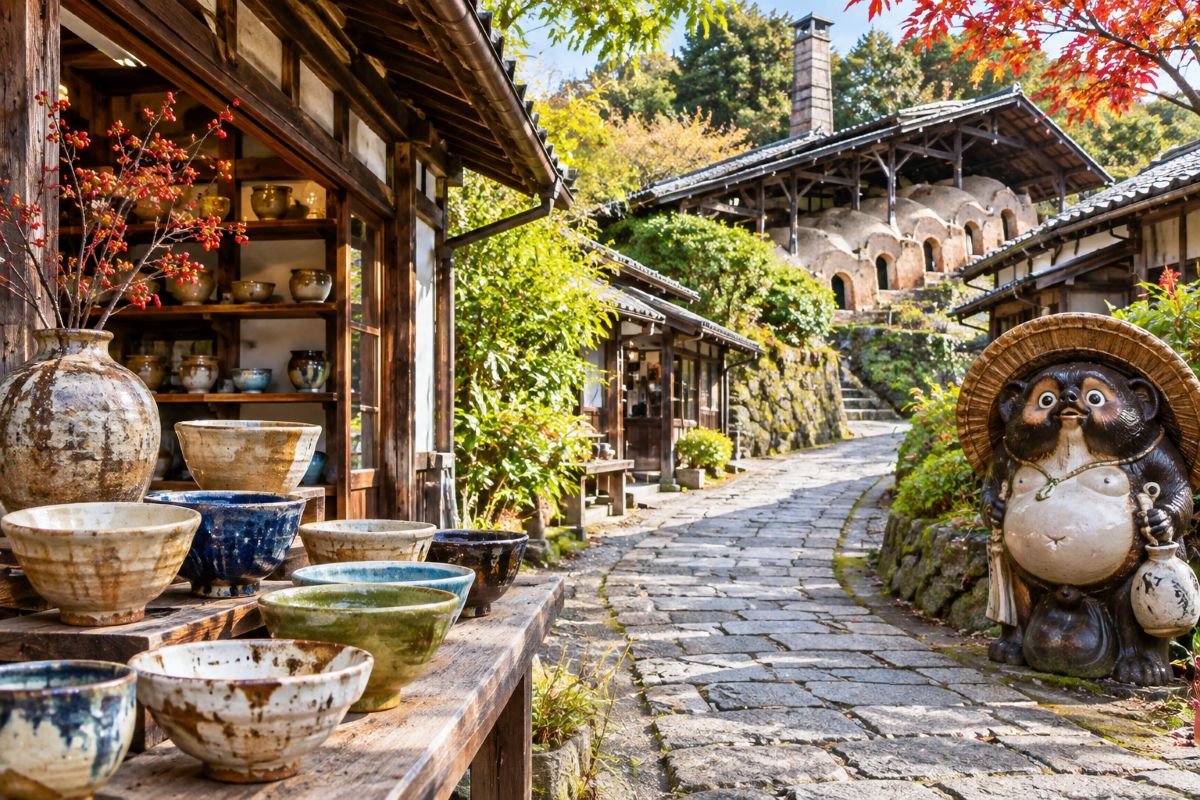
In Japan, handmade pottery is part of everyday life. Bowls, plates, and tea cups connect traditional craftsmanship with modern homes.
Visiting historic pottery towns offers an opportunity to discover how these familiar objects are created.
One famous destination is Mashiko in Tochigi Prefecture. Its pottery tradition began in 1853, when potter Keizaburo Otsuka established a kiln. Originally known for practical household items, Mashiko later became associated with the mingei, or folk craft, movement. Ceramic artist Shoji Hamada, who settled there in 1924, helped establish its artistic reputation.
Today, visitors can explore pottery shops, galleries, and seasonal pottery markets.
Another celebrated destination is Shigaraki in Shiga Prefecture, one of Japan’s Six Ancient Kilns. Its pottery tradition dates to the Kamakura period. Shigaraki ceramics are admired for their earthy textures and natural effects created during firing.
The town is also famous for ceramic tanuki statues, which became widely recognized during the twentieth century.
Visitors can explore historic kiln sites or join workshops offering hand-building, wheel-throwing, and pottery decoration.
For many Japanese people, pottery towns offer a chance to appreciate craftsmanship and find handmade objects that bring warmth to everyday life.

コメント