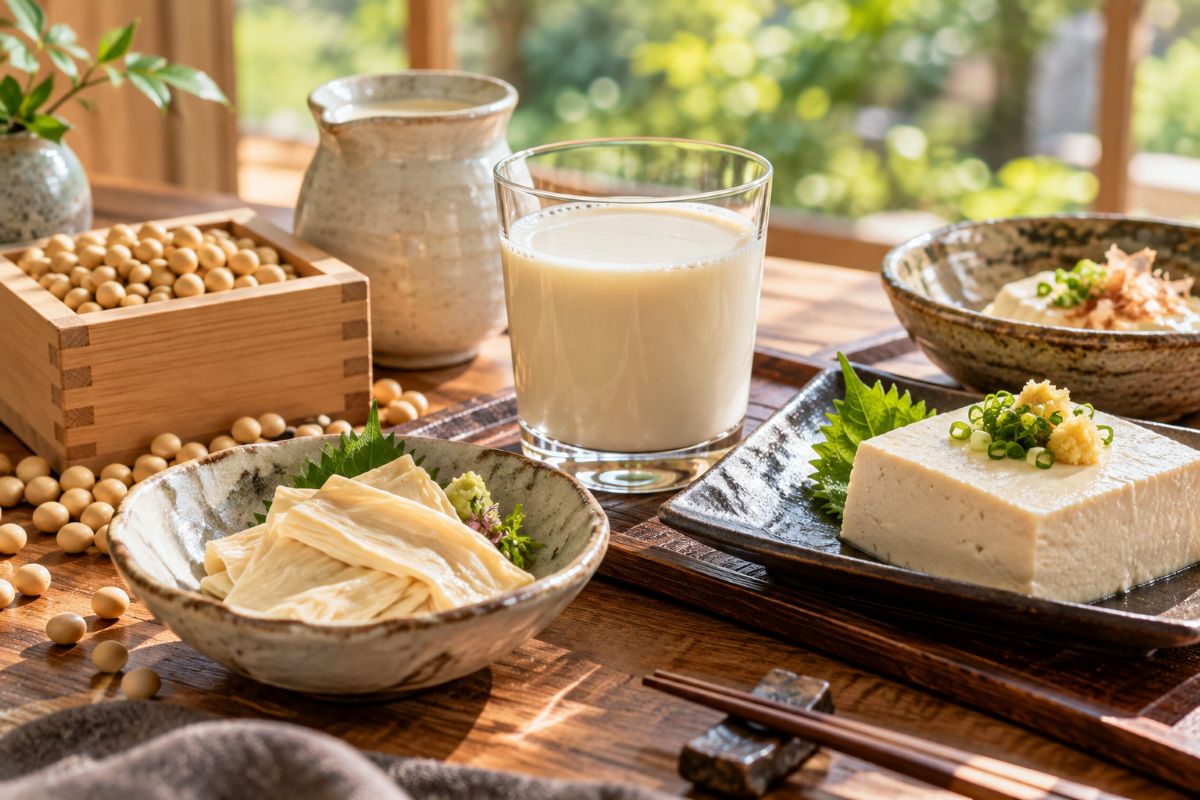
In Japan, soy milk, known as tonyu, connects traditional soybean foods with modern eating habits. Its mild flavor and versatility make it popular in drinks, cooking, and desserts.
Soy milk is made by soaking and grinding soybeans with water, then heating and filtering the mixture. The remaining soybean pulp is called okara. Adding a coagulant to soy milk produces tofu.
Another traditional food is yuba, the delicate skin that forms when soy milk is heated. In Kyoto, it is commonly written 湯葉, while in Nikko, it is often written 湯波. Both regions are known for their distinctive yuba dishes.
Japanese supermarkets offer three main categories: unadjusted soy milk (muchōsei tōnyū), adjusted soy milk (chōsei tōnyū), and flavored soy drinks, including matcha and black sesame varieties.
Soy milk also provides plant-based protein, unsaturated fats, and naturally occurring soy isoflavones. It contains no lactose, making it suitable for people with lactose intolerance. Unsweetened varieties can be a nutritious part of a balanced diet.
In 2025, Japan produced approximately 445 million liters of soy milk products, a record high.
For many Japanese people, soy milk combines traditional food culture, modern convenience, and everyday nutrition.


コメント