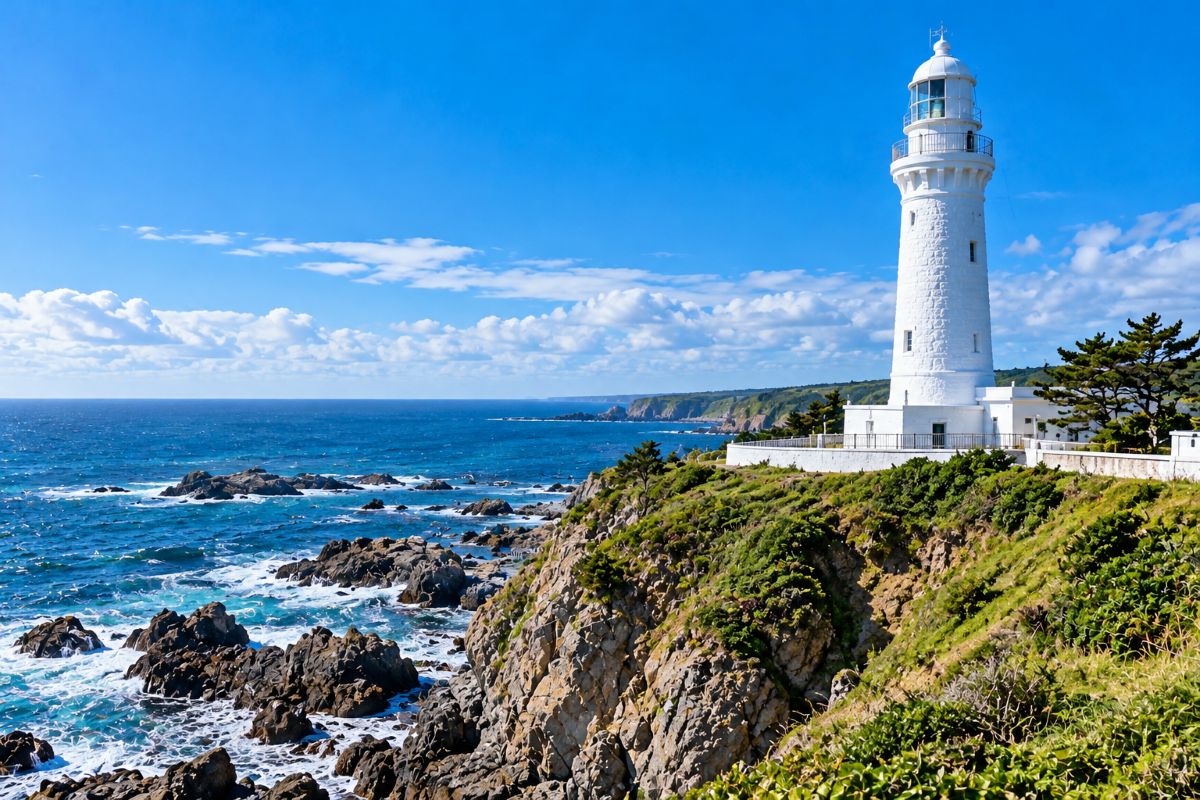
Surrounded by the sea, Japan has a long maritime history. Its historic lighthouses stand along beautiful coastlines, guiding ships and offering visitors spectacular ocean views.
One famous example is Inubosaki Lighthouse in Chiba Prefecture, first lit in 1874. Built under the guidance of British engineer Richard Henry Brunton, this white-painted brick lighthouse overlooks the Pacific Ocean. Visitors can climb its 99 steps to enjoy panoramic views when it is open to the public.
Another remarkable landmark is Izumo Hinomisaki Lighthouse in Shimane Prefecture, first lit in 1903. Standing 43.65 meters tall, it is Japan’s tallest stone lighthouse. Its white tower rises above the rugged coastline of the Sea of Japan.
Both lighthouses are designated Important Cultural Properties of Japan, reflecting their architectural and historical significance.
These landmarks also represent Japan’s modernization during the Meiji period, when improved maritime navigation helped support shipping and international trade.
For many Japanese people, visiting historic lighthouses offers a chance to enjoy coastal scenery, explore remarkable architecture, and appreciate the generations of people who have helped keep sailors safe.


コメント