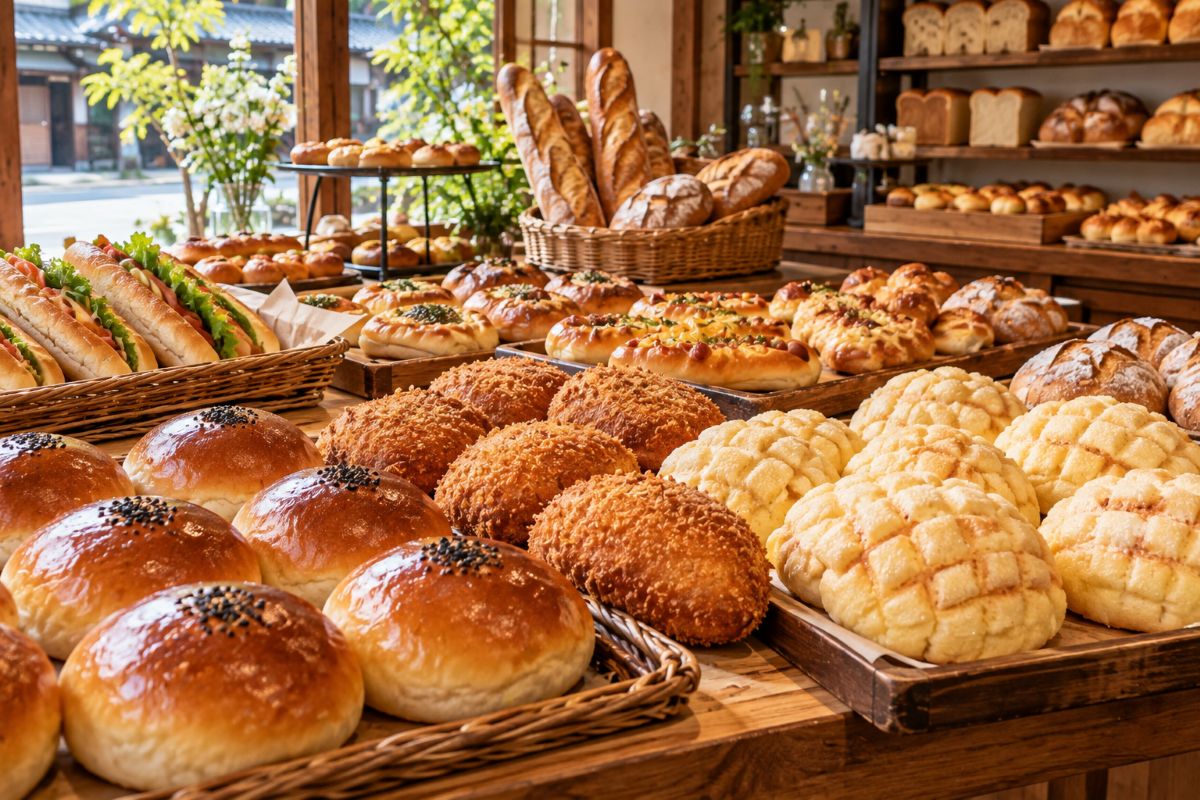
In Japan, neighborhood bakeries are part of everyday life, offering freshly baked treats that combine Western baking traditions with Japanese flavors.
One famous example is anpan, soft bread filled with sweet red bean paste. It was developed in 1874 by Tokyo’s Kimuraya bakery using a traditional Japanese fermentation method. In 1875, its anpan was presented to Emperor Meiji, helping popularize this Japanese-style bread.
Another favorite is curry pan, filled with Japanese curry. The classic version is coated in breadcrumbs and deep-fried until golden, although baked varieties are also available.
Melon pan is another popular treat. It has a soft interior and a sweet, crisp outer layer, often decorated with a melon-like pattern. Despite its name, many traditional versions contain no actual melon, and several theories explain how the name originated.
Local bakeries also offer sandwiches, seasonal pastries, and creative breads featuring regional ingredients. Customers often select their favorites from trays of freshly baked items.
For many Japanese people, stopping by a neighborhood bakery is a simple pleasure. These shops reflect Japan’s creativity in adapting international food traditions while maintaining a warm connection to everyday community life.


コメント