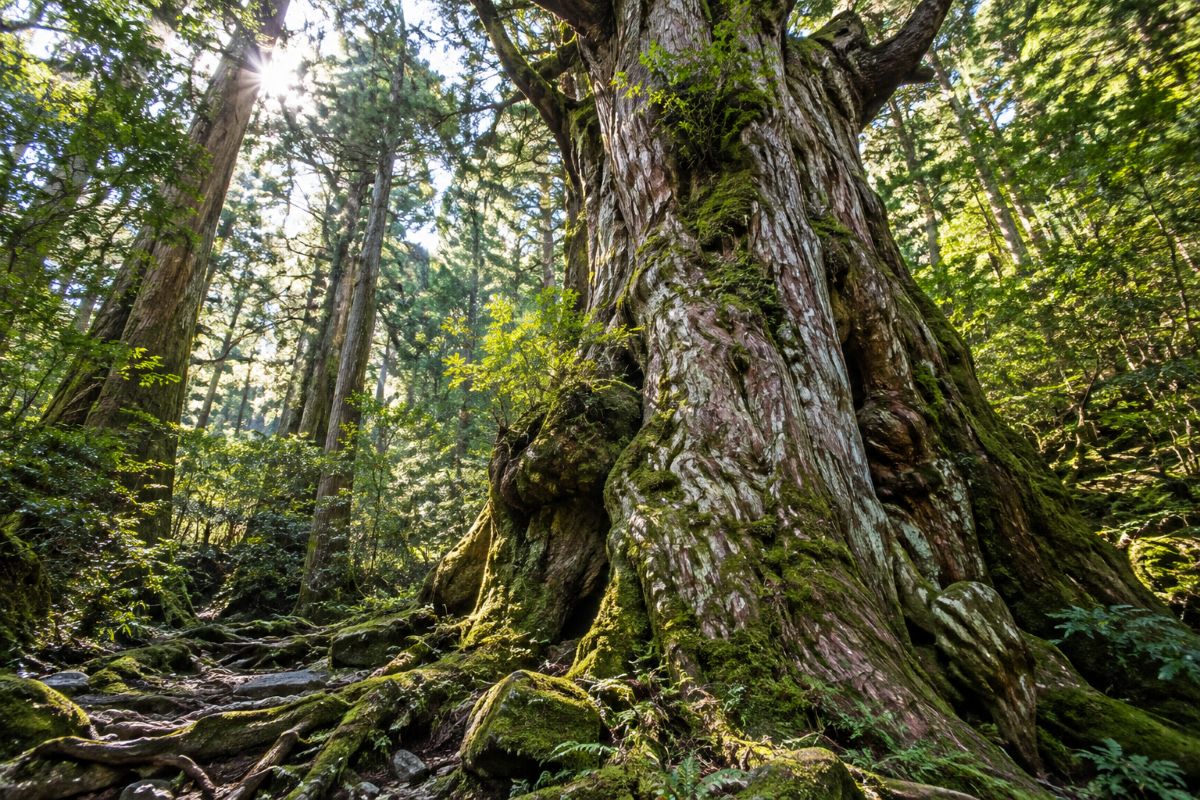
In Japan, ancient cedar trees are admired for their impressive size and deep connections to history, nature, and spirituality. Standing beneath these towering trees offers a powerful sense of time and tranquility.
One remarkable example is Jomon Sugi on Yakushima Island in Kagoshima Prefecture. This enormous Japanese cedar is believed to be thousands of years old, although its exact age remains uncertain. Yakushima’s ancient forests became a UNESCO World Natural Heritage Site in 1993, recognized for their remarkable ecosystem and ancient trees. Reaching Jomon Sugi requires a long mountain hike.
Another famous destination is Nikko in Tochigi Prefecture, where historic cedar avenues stretch approximately 37 kilometers. Planting began in 1625. Nearby, the Shrines and Temples of Nikko were designated a UNESCO World Cultural Heritage Site in 1999, although the cedar avenues themselves are not part of the listed property.
In Japanese culture, ancient trees are sometimes regarded as sacred and associated with kami, or Shinto deities.
For many Japanese people, visiting these magnificent trees offers an opportunity to appreciate nature, reflect on history, and experience a sense of peace.
コメント