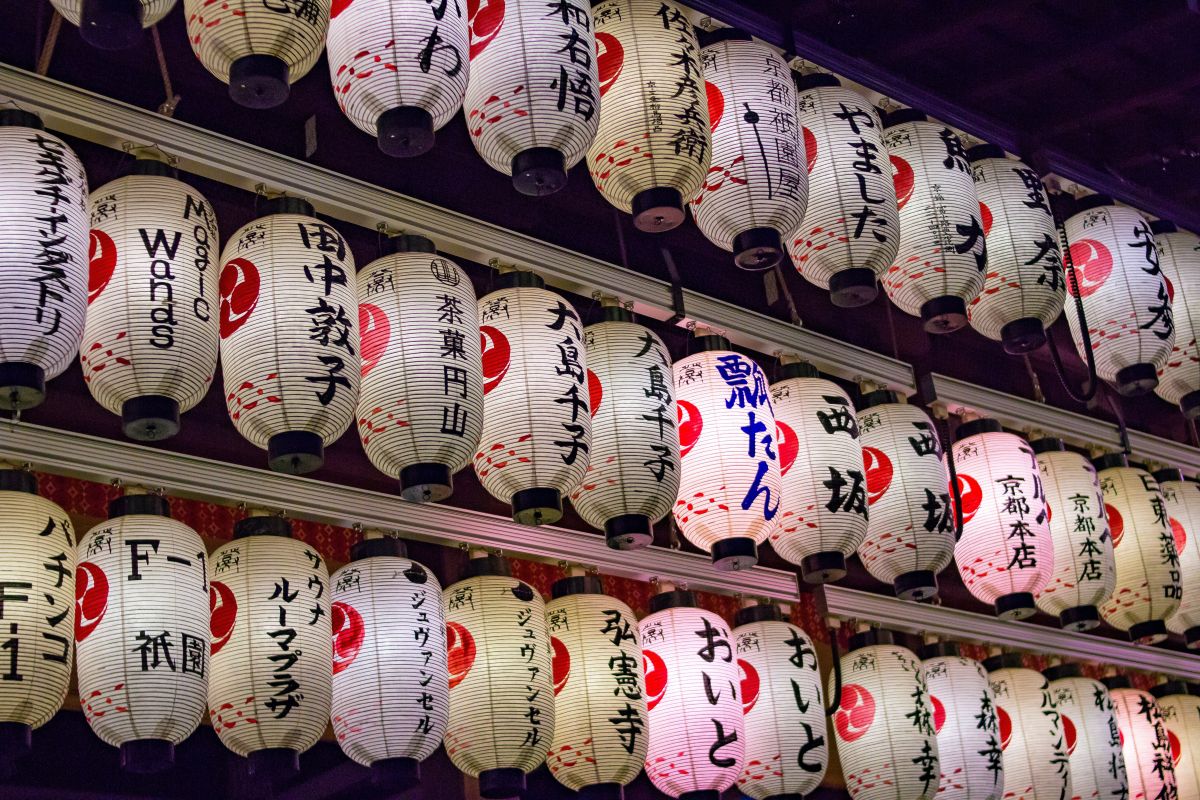
Traditional lanterns have been part of Japanese culture for centuries. Originally used to light temples, shrines, homes, and streets, they are now admired as beautiful symbols of Japan’s history and craftsmanship.
Japan has two well-known types of traditional lanterns. Chōchin are lightweight paper lanterns made with bamboo frames and washi paper, while tōrō are stone lanterns commonly found in temple grounds and Japanese gardens. Both continue to play important roles in festivals, ceremonies, and everyday scenery.
Visitors can see about 3,000 stone and bronze lanterns at Kasuga Taisha in Nara, where they have been donated by worshippers over many centuries. Another famous destination is Fushimi Inari Taisha in Kyoto, where traditional lanterns decorate many of the shrine’s buildings, creating a magical atmosphere after sunset.
During festivals, paper lanterns illuminate streets, parks, and rivers, adding warmth and color to summer evenings. Their soft light creates a peaceful atmosphere that reflects the Japanese appreciation for simplicity and seasonal beauty.
For many Japanese people, traditional lanterns are more than decorative objects. They represent history, spirituality, and the timeless charm of Japanese culture.


コメント