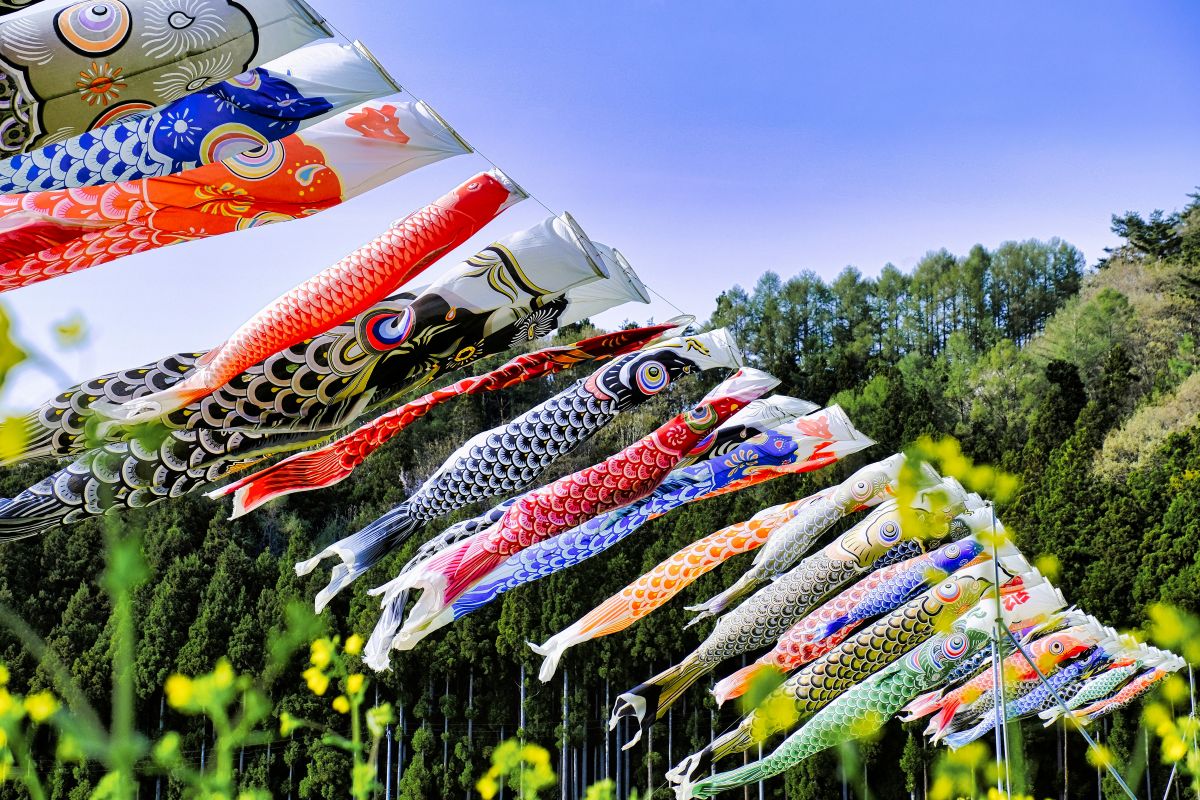
Every year on May 5, Japan celebrates Children’s Day, one of the country’s national holidays.
The day is dedicated to celebrating children’s happiness, health, and bright future. While it was once mainly associated with boys, today it honors all children.
One of the most recognizable symbols of Children’s Day is the koinobori, or carp-shaped streamers. Families fly these colorful carp outside their homes, hoping their children will grow up strong and determined.
The carp has a special meaning in Japanese culture. According to an old Chinese legend, a carp that successfully swims upstream becomes a dragon. Because of this story, the fish represents courage, perseverance, and success.
Many families also display samurai helmets (kabuto) or warrior dolls inside their homes. These decorations symbolize protection, strength, and good health.
Traditional foods are another important part of the celebration. Many people enjoy kashiwa mochi, rice cakes wrapped in oak leaves, and chimaki, sticky rice dumplings wrapped in bamboo leaves.
Children’s Day is more than a holiday.
It is a reminder of the hopes parents have for their children and the importance of supporting the next generation.
Although Children’s Day is filled with colorful decorations and family celebrations, its deeper message is timeless: wishing every child a healthy, happy, and successful future.

コメント