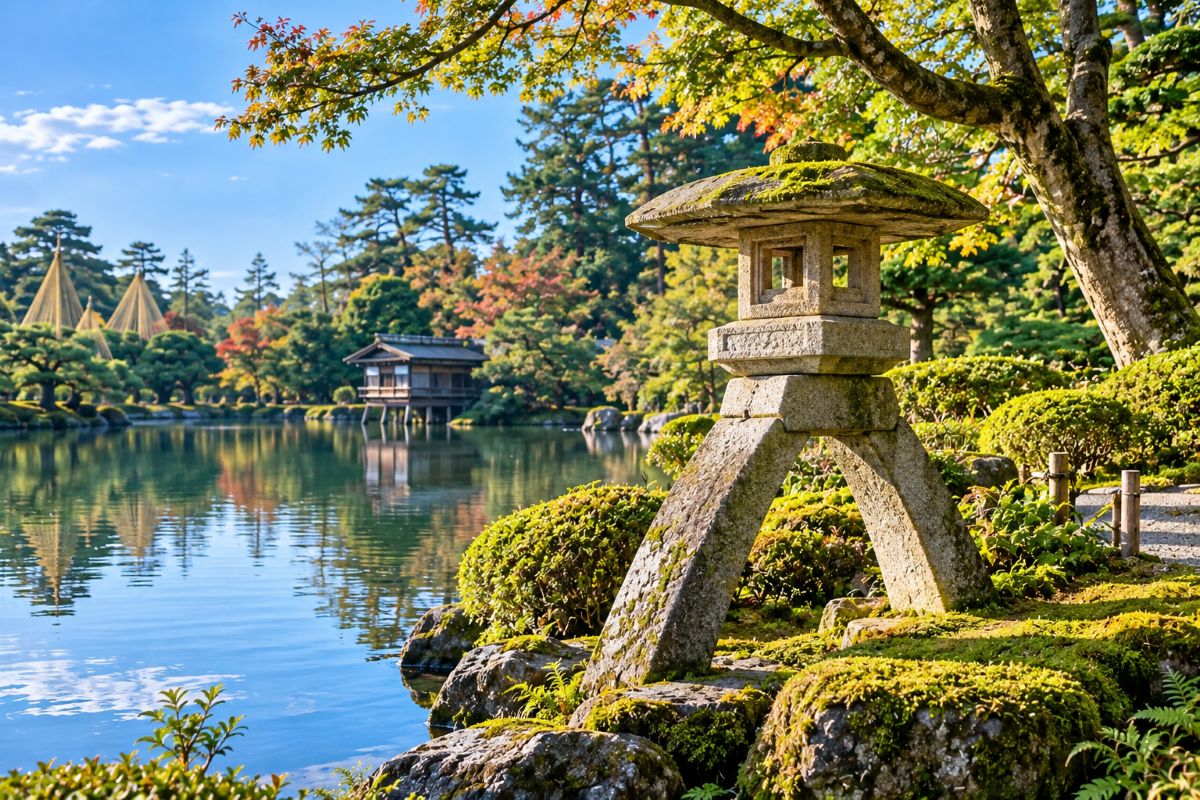
In Japan, stone lanterns, known as ishidōrō, are familiar features of traditional gardens, shrines, and temples. Their simple shapes and weathered surfaces reflect the beauty of Japanese craftsmanship and the passage of time.
Originally used to provide light in religious settings, stone lanterns gradually became important decorative elements in Japanese gardens. Their designs vary, from tall standing lanterns to smaller styles placed near pathways and ponds.
One remarkable example is Kasuga Taisha Shrine in Nara, famous for its numerous stone and hanging lanterns donated by worshippers over many generations. During special lantern festivals, thousands of lanterns illuminate the shrine, creating a memorable atmosphere.
Another well-known example is the Kotoji Lantern in Kenrokuen Garden, Kanazawa. Its distinctive two-legged design stands beside Kasumigaike Pond and has become one of the garden’s most recognizable symbols.
Stone lanterns also complement moss, rocks, water, and seasonal plants, helping create a sense of harmony within the landscape.
For many Japanese people, these lanterns represent more than decoration. They connect traditional craftsmanship, spiritual history, and an appreciation for nature’s quiet beauty.


コメント