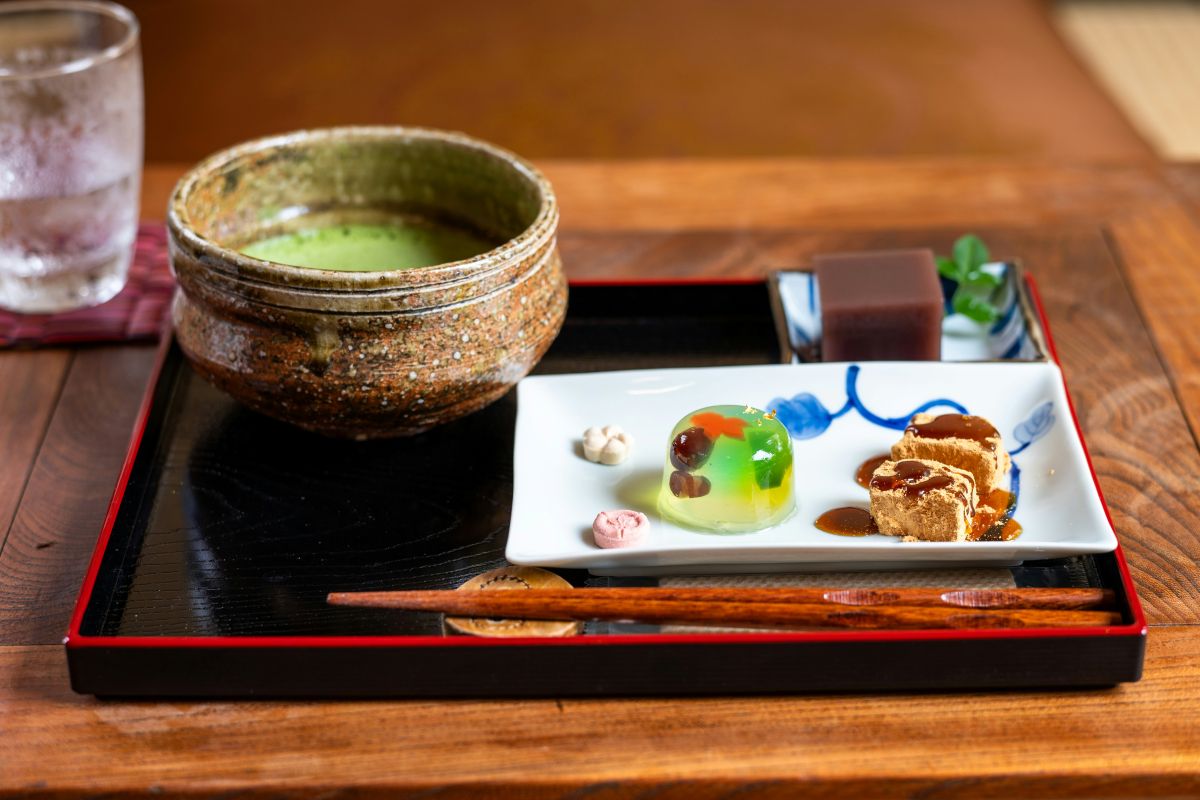
Wagashi are traditional Japanese sweets that beautifully reflect the changing seasons. Made from ingredients such as sweet bean paste, rice flour, and agar, they are carefully crafted to capture the colors and shapes of nature throughout the year.
Each season has its own special wagashi. In spring, cherry blossom–inspired sweets celebrate new beginnings. Summer brings refreshing jelly desserts, while autumn features chestnuts and sweet potatoes. Winter wagashi often have elegant white designs that resemble snow and symbolize purity.
Many wagashi are also created for seasonal festivals and tea ceremonies. Their delicate appearance is just as important as their flavor, making them a unique blend of culinary skill and artistic expression. Skilled artisans often spend years mastering the techniques needed to create these beautiful sweets.
Famous places to enjoy wagashi include Kyoto, known for its long tradition of confectionery making, and Kanazawa, where many historic sweet shops continue to preserve traditional recipes and craftsmanship.
For many Japanese people, seasonal wagashi are more than desserts. They are a delicious way to appreciate nature, celebrate the seasons, and experience an important part of Japan’s cultural heritage.


コメント