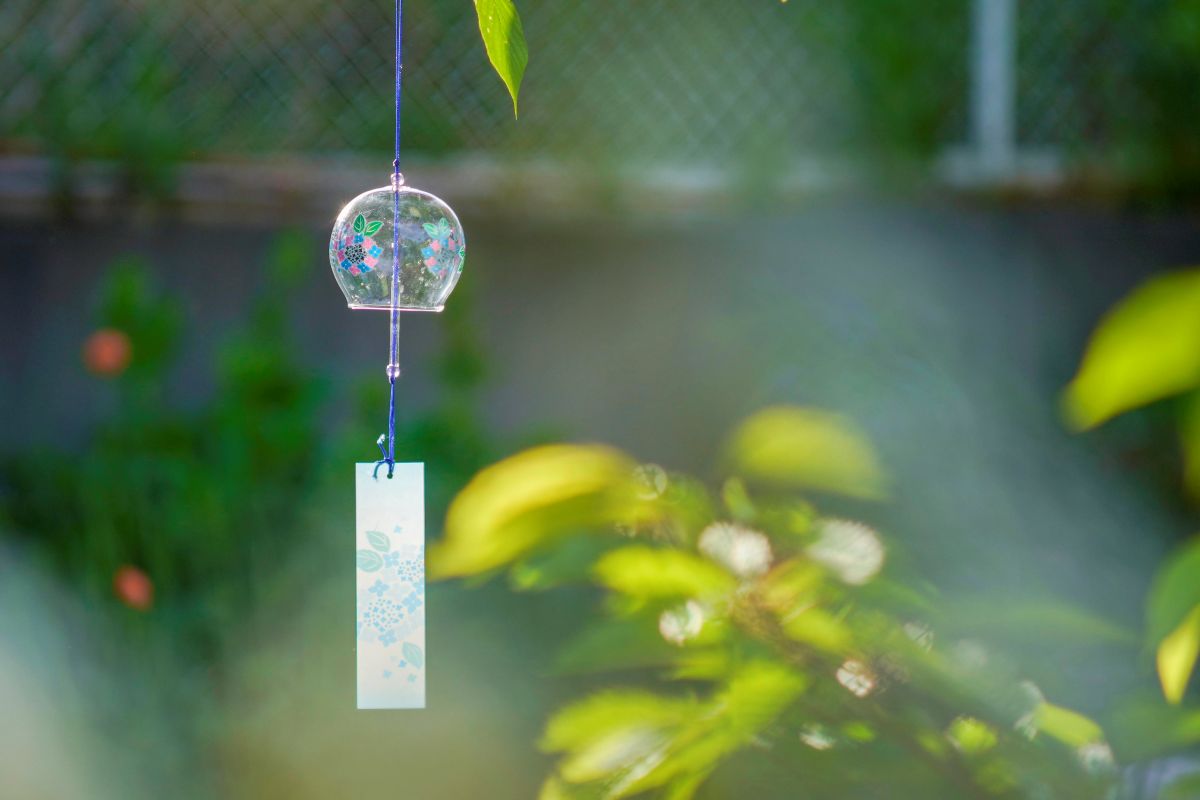
Wind chimes, known as furin, are one of Japan’s most beloved symbols of summer. Their gentle ringing is closely associated with warm weather, peaceful gardens, and traditional homes.
Originally introduced from China, wind chimes were used at Buddhist temples to ward off evil spirits. During the Edo period (1603–1868), glass wind chimes became popular among ordinary people and remain a familiar part of Japanese summer today.
Many wind chimes are made of glass, metal, or ceramic and feature seasonal designs such as goldfish, flowers, and fireworks. Their delicate sound creates a refreshing atmosphere during Japan’s hot and humid summers.
Visitors can enjoy beautiful wind chime displays at Kawagoe Hikawa Shrine in Saitama Prefecture, famous for its annual En-musubi Wind Chime Festival, and Ofusa Kannon Temple in Nara Prefecture, where thousands of wind chimes decorate the temple grounds each summer.
For many Japanese people, wind chimes are more than decorations. They symbolize the changing seasons and bring a sense of peace and relaxation during the summer months.


コメント