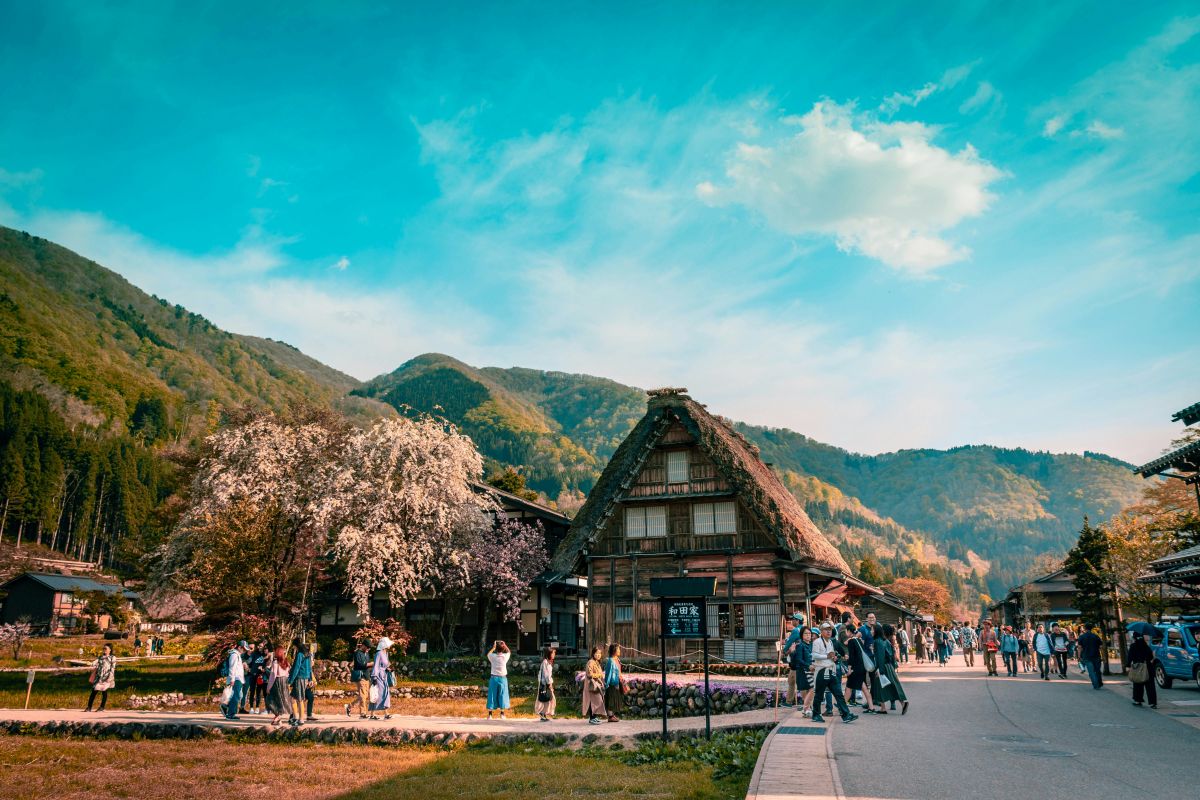
Traditional wooden houses have been an important part of Japanese life for centuries. Built mainly from natural materials such as wood, bamboo, paper, and clay, these homes reflect Japan’s respect for nature and skilled craftsmanship.
Japan has a long history of wooden architecture. Many traditional homes, known as minka, were designed to suit the country’s climate, with deep eaves for shade, sliding doors for natural ventilation, and flexible interior spaces that can be adapted for different uses. These features help keep homes comfortable throughout the changing seasons.
Visitors can experience beautifully preserved wooden houses in places such as Shirakawa-go in Gifu Prefecture, a UNESCO World Heritage Site famous for its steeply thatched gassho-zukuri farmhouses, and the Gion district of Kyoto, where traditional wooden machiya townhouses still line many historic streets.
Although modern buildings are common today, many people continue to appreciate the warmth, natural beauty, and peaceful atmosphere of traditional wooden homes. Historic houses are carefully preserved, renovated, and sometimes transformed into cafés, inns, museums, or cultural centers, allowing new generations to experience Japan’s architectural heritage.
For many Japanese people, traditional wooden houses are more than historic buildings. They represent harmony with nature, timeless design, and the enduring craftsmanship that continues to inspire modern architecture.

コメント